
Feeling Drained During Your GLP-1 Weight-Loss Journey? Here’s How NAD⁺ Injections Might Help You Feel Like Yourself Again
Many patients start GLP-1 medications with clear goals. Better health, steady weight loss, and renewed confidence. Then, a few weeks in, they notice something they didn’t expect: exhaustion. Patients notice that they are finally losing weight but they feel like they’re “running on empty.”
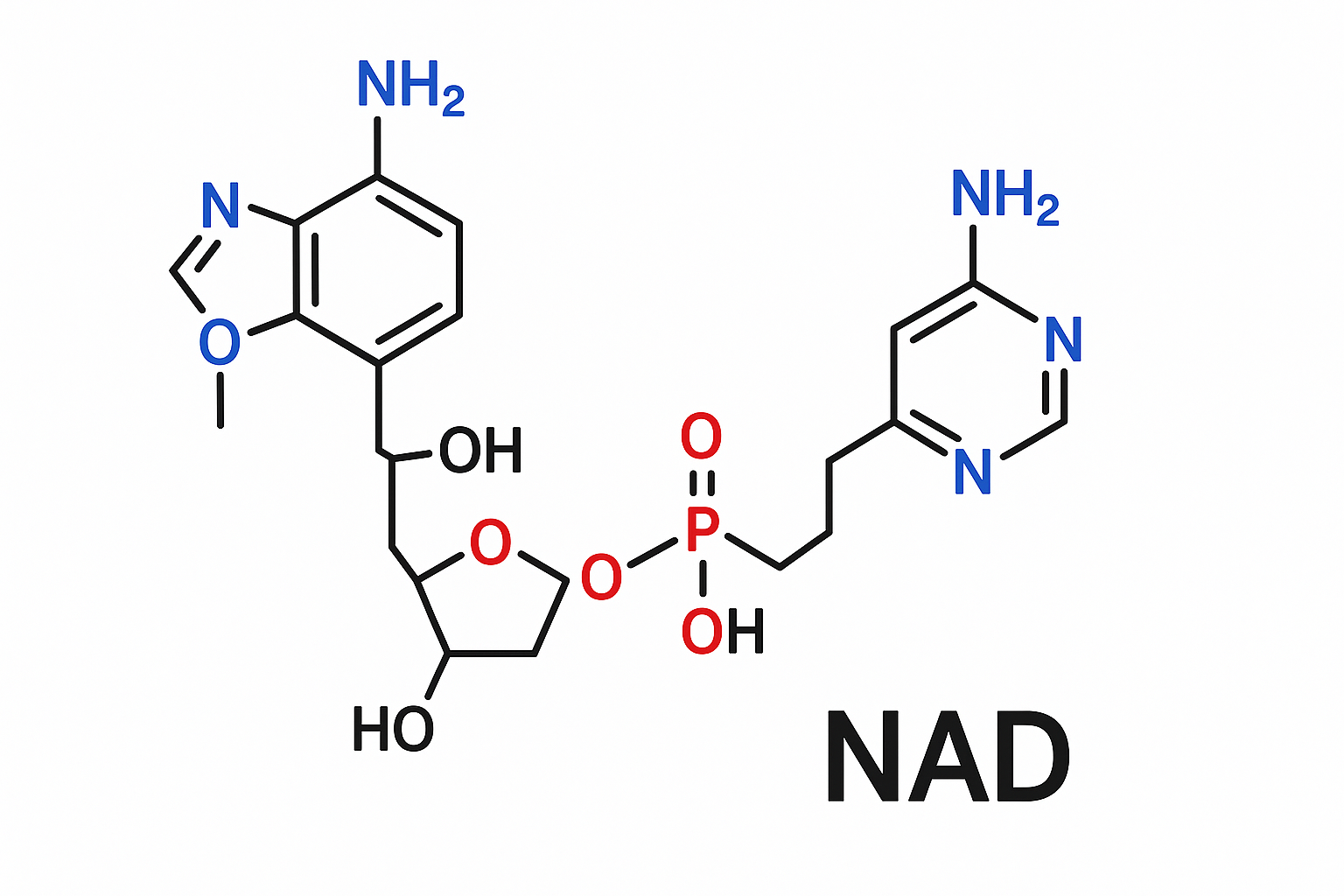
That kind of fatigue is more common than most people think. As clinicians, we’ve seen it time and again, especially during the first few months on GLP-1 medications, such as semaglutide or tirzepatide. That being said, there are ways to support energy without derailing progress. One promising tool is NAD⁺ (nicotinamide adenine dinucleotide), a coenzyme essential for cellular energy production.
Let’s dive in to why fatigue can creep in during GLP-1 therapy, what NAD⁺ actually does inside your cells, and why NAD⁺ injections are gaining attention among people who want to feel energized again.
Why Fatigue Happens with GLP-1 Weight-Loss Therapy
GLP-1 receptor agonists work by slowing digestion and decreasing appetite, so you naturally eat less (Wilding et al. 989). When calorie intake drops, your body has to adapt; essentially, it starts running on stored energy instead of constant fuel. This metabolic shift is healthy, but it can make you feel sluggish, foggy, or mentally flat for a while.
We also see a few other contributors:
- Reduced calories and protein: muscles can temporarily lose fuel.
- Mild dehydration: appetite changes often mean lower fluid intake.
- Micronutrient shifts: your body is burning through reserves.
- Mitochondrial slowdown: the “power plants” in your cells produce less ATP when nutrients drop (Yoshino et al. 1225).
That last point is where NAD⁺ becomes especially interesting.
Meet NAD⁺: Your Cells’ Energy Middleman
Inside every cell, NAD⁺ helps turn food into ATP, the molecule that literally powers movement, focus, and repair (Bogan and Brenner 118). Think of it as a universal battery connector. Without enough NAD⁺, the entire energy chain sputters.
Levels of NAD⁺ naturally decline with age and stress (Verdin 1210). Rapid weight loss, reduced caloric intake, and hormonal changes can accelerate that dip. When NAD⁺ drops, so does mitochondrial performance, leaving you with slower metabolism, mental fog, and that mid-day crash we hear about so often.
Supporting NAD⁺ levels is about more than “feeling awake.” It’s about helping your cells produce energy efficiently again, so your weight-loss plan feels sustainable instead of draining.
How NAD⁺ Injections Work
NAD⁺ occurs naturally in the body, but oral supplements can be tricky, much of it breaks down in the gut before it ever reaches the bloodstream. Injectable NAD⁺, on the other hand, delivers it directly for faster and more complete absorption (Trammell et al. 12948).
It isn’t a caffeine rush or a stimulant hit. Patients describe it more like having their “battery” quietly recharged, a steadier kind of energy that builds over several days.
Reported benefits include:
- More consistent daytime energy
- Sharper concentration and mental clarity
- Easier post-workout recovery
- Less of the “afternoon crash” feeling
The mechanism makes sense: improving mitochondrial function through NAD⁺ replenishment allows every cell, from brain to muscle, to do its job more efficiently (Stein and Imai 1813).
What the NAD+ Research Tells Us
Scientific studies show that boosting NAD⁺; either through precursors such as nicotinamide riboside or via direct supplementation; can improve mitochondrial health, reduce oxidative stress, and support metabolic balance (Cantó et al. 840; Gomes et al. 1626).
In one study, NAD⁺ precursors increased muscle insulin sensitivity in prediabetic women (Yoshino et al. 1228). Others found improved cellular resilience and better energy metabolism during caloric restriction (Rajman et al. 505). There aren’t yet large trials on GLP-1 users specifically, but the biology lines up. Restoring NAD⁺ gives the body more of what it needs to adapt to weight loss gracefully. It’s a complementary therapy, not a replacement; GLP-1 targets appetite and insulin regulation, NAD⁺ supports the energy systems behind them.
Why So Many Patients Ask About NAD+
Typically, patients on GLP-1s often say, “I finally have control over my hunger, but I miss my old energy.” That’s where NAD⁺ can help bridge the gap. It supports sustainable vitality without relying on stimulants or sugar.
Unlike quick-fix solutions, NAD⁺ injections work at the cellular level. They don’t just mask fatigue; they help your body restore its natural rhythm (Rajman et al. 508). For anyone balancing work, family, and weight-loss goals, that steadier kind of energy can make all the difference.
What to Expect from NAD+ Therapy
Treatment plans vary, but most patients start with a series of injections administered by a licensed provider. Each session usually takes less than an hour. Energy improvements tend to appear gradually over several sessions as NAD⁺ levels stabilize.
Some describe it as “having my spark back.” Others simply notice fewer dips in focus or mood. If you’re using GLP-1 medication, your clinician will tailor dosing to complement your therapy and avoid overlap with other metabolic agents.
Who Might Benefit Most
NAD⁺ therapy may be particularly helpful for:
- Patients using GLP-1s who experience persistent fatigue
- Individuals adjusting to lower calorie intake
- Those maintaining weight loss and looking for better recovery
- Anyone under physical or cognitive stress
It’s not about perfection; it’s about feeling capable and balanced while your body transforms.
A Science-Backed Way to Support Your Energy
Weight-loss success should feel empowering, not exhausting. If you’ve been feeling drained on a GLP-1, ask your Precision Telemed provider whether NAD⁺ injections could fit into your care plan.
Our team focuses on evidence-based, patient-centered therapies that help you achieve lasting results, and feel your best while doing it. You’ve done the hard part by starting; NAD⁺ might just help you finish strong.
References
Bogan, K. L., and C. Brenner. “Nicotinic Acid, Nicotinamide, and Nicotinamide Riboside: A Molecular Evaluation of NAD⁺ Precursor Vitamins in Human Nutrition.” Annual Review of Nutrition, vol. 28, 2008, pp. 115–130. Link: Nicotinic acid, nicotinamide, and nicotinamide riboside: a molecular evaluation of NAD+ precursor vitamins in human nutrition – PubMed
Cantó, C., et al. “The NAD⁺ Precursor Nicotinamide Riboside Enhances Oxidative Metabolism and Protects against High-Fat Diet-Induced Obesity.” Cell Metabolism, vol. 15, no. 6, 2012, pp. 838–847. Link: https://pubmed.ncbi.nlm.nih.gov/22682224/
Gomes, A. P., et al. “Declining NAD⁺ Induces a Pseudohypoxic State Disrupting Nuclear-Mitochondrial Communication during Aging.” Cell, vol. 155, no. 7, 2013, pp. 1624–1638.
Rajman, L., et al. “NAD⁺ as a Metabolic Link between DNA Damage, Aging, and Disease.” Cell Metabolism, vol. 27, no. 3, 2018, pp. 502–514. Link: https://pmc.ncbi.nlm.nih.gov/articles/PMC4076149/
Stein, L. R., and S. Imai. “Specific Ablation of Nampt in Adult Neural Stem Cells Recapitulates the Age-Associated Decline in Neural Stem Cell Function.” Genes & Development, vol. 28, 2014, pp. 1812–1823. Link: https://pubmed.ncbi.nlm.nih.gov/24811750/
Trammell, S. A. J., et al. “Nicotinamide Riboside Is Uniquely and Orally Bioavailable in Mice and Humans.” Nature Communications, vol. 7, 2016, Article 12948. Link: https://www.nature.com/articles/ncomms12948
Verdin, E. “NAD⁺ in Aging, Metabolism, and Neurodegeneration.” Science, vol. 350, no. 6265, 2015, pp. 1208–1213. Link: https://pubmed.ncbi.nlm.nih.gov/26785480/
Wilding, J. P. H., et al. “Once-Weekly Semaglutide in Adults with Overweight or Obesity.” New England Journal of Medicine, vol. 384, 2021, pp. 989–1002. Link: https://pubmed.ncbi.nlm.nih.gov/33567185/
Yoshino, J., et al. “Nicotinamide Mononucleotide Increases Muscle Insulin Sensitivity in Prediabetic Women.” Science, vol. 372, 2021, pp. 1224–1229. Link: https://pubmed.ncbi.nlm.nih.gov/33888596/
Yoshino, J., et al. “SIRT1 Activation Mediates the Beneficial Effects of Resveratrol on Mitochondrial Function.” Cell Metabolism, vol. 14, no. 5, 2011, pp. 612–620. Link: https://pubmed.ncbi.nlm.nih.gov/22560220/
Precision Telemed Clickable Links
Compounded Tirzepatide
Compounded Semaglutide
Sermorelin Peptide
NAD+ Injections
Testosterone Replacement Therapy
Hair Loss
Erectile Dysfunction