

Tag: Tirzepatide Peptide

  • Tirzepatide for PCOS: Tirzepatide Shows Promise for Treatment of Polycystic Ovary Syndrome (PCOS)

    Tirzepatide for PCOS: Tirzepatide Shows Promise for Treatment of Polycystic Ovary Syndrome (PCOS)

    What is PCOS?

    Polycystic ovarian syndrome (PCOS) is a common hormonal disorder that affects around 10–15% of women of reproductive age worldwide. Irregular menstrual cycles, signs of excess androgen hormones, including acne and hirsutism, insulin resistance, obesity, and infertility, frequently occur as a result of this condition. It has become more common for women to turn to Tirzepatide for PCOS.

    Weight Loss is the Primary Management Goal in PCOS

    The primary intervention is weight loss for most patients with PCOS, as weight loss can restore ovulatory cycles and improve metabolic abnormalities that pose health risks to women with PCOS. 

    Although weight loss in patients who maintain long-term lifestyle changes, such as caloric restriction and exercise, can resolve ovulatory cycles and correct metabolic imbalances, it is difficult for many women to sustain long-term change through lifestyle modification alone, and the weight loss tends to return after a year or less. 

    Other treatments currently used to manage PCOS aim to correct specific abnormalities. Goals of management include:

    • Correction of metabolic abnormalities, which increase the risk of type 2 diabetes and cardiovascular disease.
    • Management of symptoms of excess androgens: acne, excess hair growth, loss of scalp hair  
    • Preventing hyperplasia of the uterine lining, which can lead to uterine cancer
    • Contraception for women who do not wish to become pregnant, as irregular cycles can result in unintended pregnancy. 
    • Ovulation induction for women who desire pregnancy.

    Current Treatments for PCOS

    • Combined oral contraceptives are the current mainstay of treatment.
      • Although these medications carry an increased risk of venous thromboembolic disease (pulmonary emboli, deep vein thrombosis) in women who have PCOS, it is similar to the risk in women without PCOS.
      • Alternative options such as progestin-only mini-pills or progestin-releasing IUDs reduce the risk of hyperplasia of the uterine lining, a risk factor for endometrial cancer, and provide a contraceptive alternative.
    • Cosmetic treatments or direct hair removal are usually recommended initially for women with hirsutism caused by excess androgen hormones.
      • Antiandrogenic medications may be prescribed after 6 months of combined oral contraceptive therapy fails to achieve an adequate response to androgenic features.
    • Metformin or other antidiabetic medications are prescribed for insulin resistance

     or type 2 diabetes.

    • Metformin was once believed to improve hirsuitism in PCOS, but is less effective than treatment with combined oral contraceptives or anti-androgens. 
    • Statin medications are prescribed for related lipid disorders, in addition to the usual lifestyle and dietary changes.

    Weight Loss is a Key Component of the Treatment of PCOS

    Most experts suggest that weight loss through lifestyle changes like diet and exercise should begin before women with PCOS start treatment to induce regular ovulation with combined oral contraceptives and antiandrogenic therapies. 

    Women with PCOS, like women without PCOS, have been found to have variable responses to lifestyle changes like diet and exercise. More than a third of women with PCOS  in a small long-term study had a complete response after approximately 20 months of following a 1200-1400 kcal/day diet for 6 months, followed by mild caloric restriction and increased physical activity. However, many studies have found that maintaining lifestyle changes and sustained weight loss is inconsistent, with most weight regained within a year.

    Tirzepatide’s Potential Benefits for the Treatment of  PCOS

    PCOS is closely linked to insulin resistance, even in women who are at a healthy weight. When insulin levels are excessively high, the ovaries create too much androgen. This can make ovulation erratic and cause unwanted symptoms like infertility, androgenic symptoms like acne, and excessive abnormal hair growth.

    In the SURMOUNT-1 study, patients without diabetes lost 15% to 21% of their initial body weight, depending on the dose. These results are highly important because decreasing weight can usually help with ovulation and androgen symptoms in women with PCOS.

    Prior studies utilizing GLP-1 receptor agonists (e.g., liraglutide and semaglutide) in women with PCOS have demonstrated benefits in weight control, insulin resistance, and waist circumference, as well as signs of improved ovulatory regularity. Tirzepatide may be significantly more effective due to its novel dual receptor mechanism of action.

    Tirzepatide and PCOS: What Lies Ahead

    Tirzepatide may help women with PCOS by: 

    • Increasing insulin sensitivity and reducing insulin resistance are primary features of PCOS.
    • Improving ovulatory regulation and fertility
      • Weight is the most important element affecting ovulatory cycles and fertility.
    • Increasing and sustaining weight loss.
      • The SURMOUNT-4 study, a randomized clinical trial of continued maintenance of weight reduction in adults with obesity, treated participants with weekly doses of tirzepatide for 36 weeks. The mean weight reduction at 36 weeks was 20.9%, and participants were randomized to receive either a placebo or continued tirzepitide.
      • Participants who were randomized to tirzepatide instead of placebo from week 36 for a further 52 weeks were found to maintain at least 80% of their weight loss, compared to 16.6% of those who were randomized to the placebo.
    • Hirsuitism and hyperandrogenism.
      • Lowering insulin levels may limit the production of ovarian androgens, which could make cycles more regular and possibly boost conception.
    • Reducing metabolic and cardiovascular risk
      •  Women with PCOS are more prone to developing type 2 diabetes and heart disease. Tirzepatide’s effects may lessen these risks over time.

    Additional research will answer these questions, as there is a good deal of interest in the potential of tirzepatide for the management of PCOS

    References

    Anala AD, Saifudeen ISH, Ibrahim M, Nanda M, Naaz N, Atkin SL. The Potential Utility of Tirzepatide for the Management of Polycystic Ovary Syndrome. J Clin Med. 2023;12(14):4575. Published 2023 Jul 10. doi:10.3390/jcm1214457 Link: https://pubmed.ncbi.nlm.nih.gov/37510690/

    Aronne LJ, Sattar N, Horn DB, et al. Continued Treatment With Tirzepatide for Maintenance of Weight Reduction in Adults With Obesity: The SURMOUNT-4 Randomized Clinical Trial. JAMA. 2024;331(1):38-48. doi:10.1001/jama.2023.24945 Link: https://jamanetwork.com/journals/jama/fullarticle/2812936

    Domecq JP, Prutsky G, Mullan RJ, et al. Adverse effects of the common treatments for polycystic ovary syndrome: a systematic review and meta-analysis. J Clin Endocrinol Metab. 2013;98(12):4646-4654. doi:10.1210/jc.2013-2374 Link: https://pubmed.ncbi.nlm.nih.gov/24092830/

    Fisman EZ, Tenenbaum A. The dual glucose-dependent insulinotropic polypeptide (GIP) and glucagon-like peptide-1 (GLP-1) receptor agonist tirzepatide: a novel cardiometabolic therapeutic prospect. Cardiovasc Diabetol. 2021;20(1):225. Published 2021 Nov 24. doi:10.1186/s12933-021-01412-5 Link: https://pubmed.ncbi.nlm.nih.gov/34819089/

    Giallauria F, Orio F, Palomba S, Lombardi G, Colao A, Vigorito C. Cardiovascular risk in women with polycystic ovary syndrome. J Cardiovasc Med (Hagerstown). 2008;9(10):987-992. doi:10.2459/JCM.0b013e32830b58d4 Link: https://pubmed.ncbi.nlm.nih.gov/18799960/

    Hoeger KM. Obesity and lifestyle management in polycystic ovary syndrome. Clin Obstet Gynecol. 2007;50(1):277-294. doi:10.1097/GRF.0b013e31802f54c8 Link: https://pubmed.ncbi.nlm.nih.gov/17304042/

    Moreira RO, Valerio CM, Hohl A, et al. Pharmacologic Treatment of Obesity in adults and its impact on comorbidities: 2024 Update and Position Statement of Specialists from the Brazilian Association for the Study of Obesity and Metabolic Syndrome (Abeso) and the Brazilian Society of Endocrinology and Metabolism (SBEM). Arch Endocrinol Metab. 2024;68:e240422. Published 2024 Nov 25. doi:10.20945/2359-4292-2024-0422 Link: https://pubmed.ncbi.nlm.nih.gov/39664998/

    Norman RJ, Noakes M, Wu R, Davies MJ, Moran L, Wang JX. Improving reproductive performance in overweight/obese women with effective weight management. Hum Reprod Update. 2004;10(3):267-280. doi:10.1093/humupd/dmh018 Link: https://pubmed.ncbi.nlm.nih.gov/15140873/

    Pasquali R, Gambineri A, Cavazza C, et al. Heterogeneity in the responsiveness to long-term lifestyle intervention and predictability in obese women with polycystic ovary syndrome. Eur J Endocrinol. 2011;164(1):53-60. doi:10.1530/EJE-10-0692 Link: https://pubmed.ncbi.nlm.nih.gov/20956435/

    Sassin MD, A. M., SangiHaghpeykar MD, PhD, H., Kjersti, S., Aagaard, PhD, M., & Detti MD, L. (2023, October). Effects of metformin alone versus metformin and tirzepatide on weight loss in patients with polycystic ovarian syndrome (PCOS) [Poster session]. POSTER ABSTRACT SESSION: REPRODUCTIVE MEDICINE- NON-INFERTILITY . Link: https://www.fertstert.org/article/S0015-0282(23)01397-3/fulltext

    Skow MA, Bergmann NC, Knop FK. Diabetes and obesity treatment based on dual incretin receptor activation: ‘twincretins’. Diabetes Obes Metab. 2016;18(9):847-854. doi:10.1111/dom.12685 Link: https://pubmed.ncbi.nlm.nih.gov/27160961/

    van Zuuren EJ, Fedorowicz Z, Carter B, Pandis N. Interventions for hirsutism (excluding laser and photoepilation therapy alone). Cochrane Database Syst Rev. 2015;20
    15(4):CD010334. Published 2015 Apr 28. doi:10.1002/14651858.CD010334.pub2 Link: https://pubmed.ncbi.nlm.nih.gov/25918921/

    Precision Telemed Clickable Links
    Compounded Tirzepatide
    Compounded Semaglutide
    Sermorelin Peptide
    NAD+ Injections
    Testosterone Replacement Therapy
    Hair Loss
    Erectile Dysfunction
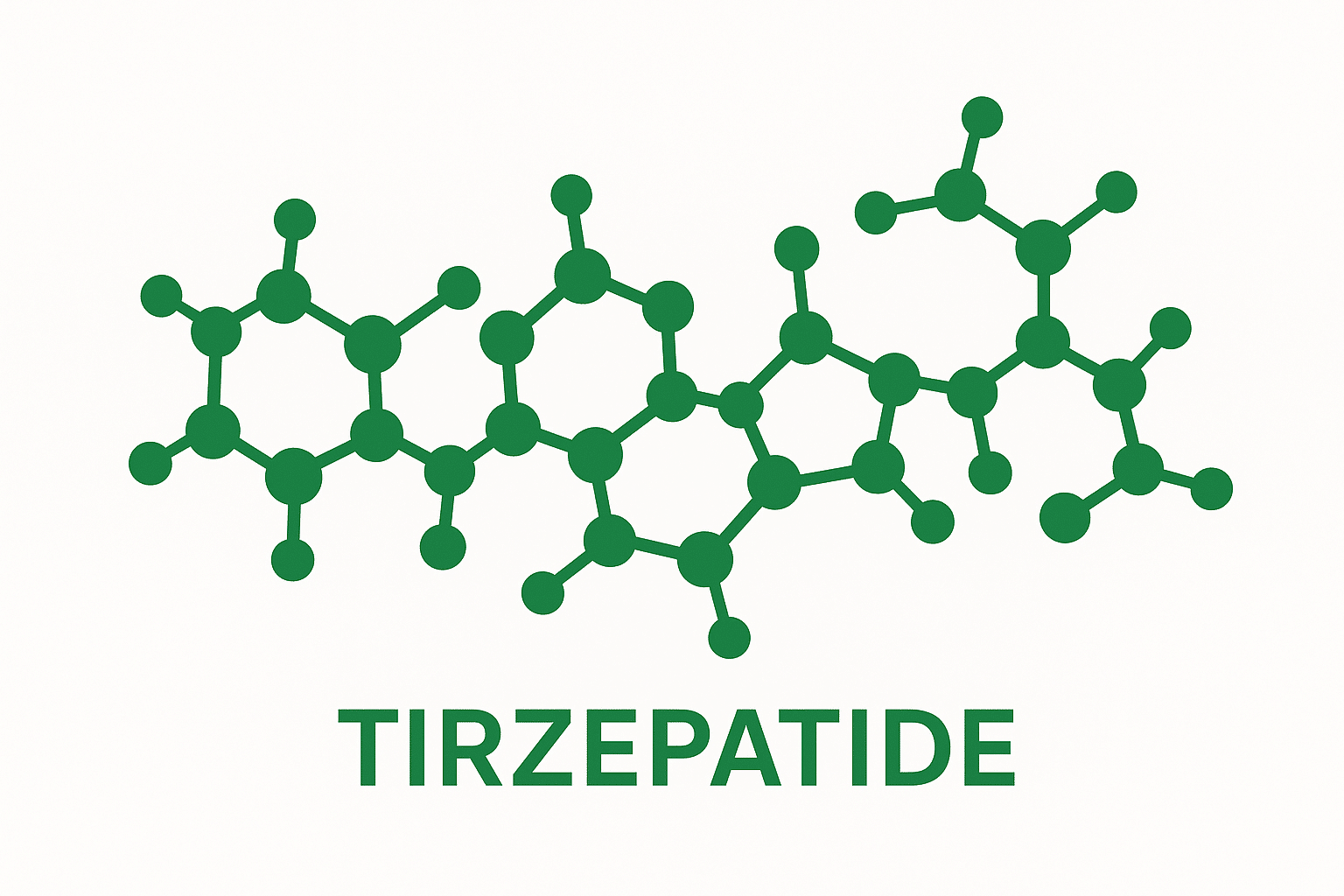
  • Compounded Tirzepatide: A Dual-Action Peptide

    Compounded Tirzepatide: A Dual-Action Peptide

    Tirzepatide is the first medication in a new drug class sometimes known as a twincretin, because it targets two hormone receptors that regulate insulin and metabolism. Although tirzepatide was initially developed to treat type 2 diabetes, it has demonstrated significant effects on weight loss and has been rapidly adopted under the brand names Mounjaro (for diabetes) and Zepbound (for obesity).

    The high demand for these drugs has resulted in shortages, so many patients and providers have turned to compounded tirzepatide, created at specialty pharmacies. If you are considering your options, it is essential to understand how tirzepatide works and the differences between the FDA-approved and compounded versions of this medication.

    What Is Tirzepatide Peptide?

    Tirzepatide is a synthetic peptide that consists of 39 amino acids. Amino acids are the building blocks of proteins. Peptides are short amino acid chains. They serve many important bodily functions. In addition to being the foundation of all proteins, they are involved in the immune system, tissue repair, signal transmission between cells, and the regulation of cellular function.

    Tirzepatide mimics the action of two natural hormones released by intestinal cells: glucagon-like peptide-1 (GLP-1) and glucose-dependent insulinotropic polypeptide (GIP). These hormones, known as incretins, are secreted after eating and play critical roles in regulating appetite, stimulating the release of insulin, and processing carbohydrates and fats.

    Tirzepatide acts on both GLP-1 and GIP receptors, which increase insulin secretion, slow stomach emptying, decrease appetite, and improve glucose control.

    Insulin, Glucagon, and Blood Sugar Control

    Maintaining a healthy blood sugar balance depends on the coordination of insulin and glucagon. These two peptide hormones, secreted by the pancreas, regulate blood sugar by acting on various cells and tissues throughout the body.

    Insulin

    • Insulin signals cells to take up glucose from the blood and convert it to glycogen, a form of carbohydrate storage in the liver and skeletal muscle.
      • Glycogen is composed of chains of glucose molecules that can be rapidly broken down into glucose when the body requires energy.
    • Insulin also stimulates the uptake of glucose by fat cells, which then synthesize fat from glucose for longer-term storage.
    • Insulin lowers blood sugar.

    Glucagon

    • Glucagon, by contrast, is released when blood sugar is low. I
    • Glucagon signals the liver to break down glycogen into glucose for energy.
    • Glucagon also stimulates glucose production from non-carbohydrate sources such as amino acids, a process known as gluconeogenesis.
    • Glucagon typically increases blood sugar.

    How Does Tirzepatide Peptide Work?

    Tirzepatide shifts the balance of insulin and glucagon toward greater insulin action and reduced glucagon release, leading to improved glucose control and decreased hunger.

    Tirzepatide’s dual action sets it apart from medications like semaglutide (Wegovy or Ozempic):

    GLP-1 activity

    • Increases the number of pancreatic betal cells
    • Stimulates insulin secretion by beta cells
    • Increases insulin sensitivity
    • Increases clearance of triglycerides (a type of cholesterol)
    • Breaks up fats
    • Delays stomach emptying
    • Acts on the brain’s appetite centers to promote fullness

    GIP activity

    • Mainly acts on pancreas
    • Decreases glucagon release by the pancreas
    • Increases insulin release
    • Promotes fat storage
    • Supports the synthesis of glycogen

    People with type 2 diabetes often have abnormally low levels of GIP, or their pancreatic cells do not respond normally to GIP to release an adequate amount of insulin with food intake. People with obesity often have elevated GIP levels, since dietary fat stimulates GIP secretion.

    The combined action of tirzepatide makes it highly effective in lowering hemoglobin A1C in individuals with diabetes and supporting sustained weight loss in those with obesity.

    Manufacturing Shortages Led to Compounded Tirzepatide

    Although Mounjaro is FDA-approved for the management of type 2 diabetes, doctors also prescribe it “off-label” for weight loss. Off-label prescribing refers to the use of a medication for a purpose other than its original FDA-approved indication. Zepbound is the same drug, but it is FDA-approved for weight loss in people with obesity. Neither drug currently has a generic version.

    Due to the high demand for the drugs, a shortage of tirzepatide began in 2022 and lasted until December 2024. During this period, the FDA added tirzepatide to its drug shortage list and worked with the manufacturer to increase production. Although the shortage has largely been resolved, occasional supply issues persist at some pharmacies.

    When a drug is on the shortage list, state-licensed compounding pharmacies are permitted to prepare compounded drugs that closely match the FDA-approved product. The active ingredient remains the same, although a compounding pharmacy may add or remove non-essential ingredients.

    Compounded medications may also be prepared to remove allergens, create a liquid form for patients who cannot swallow pills, or adjust the dose strength to meet a specific patient’s needs.

    What Is Compounded Tirzepatide?

    Compounded tirzepatide has the same active ingredient as the FDA-approved brands. In some cases, an additional ingredient, such as vitamin B12, may be added. Compounded tirzepatide is legal, widely available through state-licensed compounding pharmacies, and often less expensive than brand-name versions.

    Is Compounded Tirzepatide the Same as the Brand?

    While compounded tirzepatide contains the same active ingredient as Mounjaro and Zepbound, there are some important differences:

    • FDA-approved tirzepatide undergoes rigorous clinical testing and quality control. Compounded tirzepatide is not FDA-approved because it has not undergone the same review process, despite containing the same active peptide.

    • Compounding pharmacies may prepare tirzepatide in different concentrations or delivery forms (such as multi-dose vials instead of prefilled pens).

    • Quality may vary depending on the pharmacy. Patients should always obtain compounded tirzepatide from reputable, state-licensed pharmacies.

    • In October 2024, the tirzepatide shortage was resolved, which limited compounding to patient-specific needs.

    Why Many Patients Choose Compounded Tirzepatide

    Compounded tirzepatide remains an attractive option for many patients. Cost is a major driver, since Mounjaro and Zepbound can cost more than $1,000 per month without insurance coverage. For uninsured patients or those denied coverage, compounded tirzepatide may be significantly more affordable.

    Others prefer compounded tirzepatide because compounding pharmacies may offer dosing flexibility or added ingredients such as vitamin B12. For these reasons, patients should consult with their providers and always choose a reputable, state-licensed compounding pharmacy.

    Key Takeaways

    • Tirzepatide is a novel twincretin therapy that improves glucose control and promotes weight loss.

    • Compounded versions of tirzepatide were created to provide an option for patients during drug shortages. It contains the same active peptide as the brand versions.

    • FDA-approved products (Mounjaro, Zepbound) are still considered the gold standard for safety and consistency.

    • Patients considering compounded tirzepatide should only obtain it from licensed pharmacies and under close medical supervision.

    Concluding Thoughts

    Tirzepatide is the first medication in a new class of drugs that target both the GLP-1 and GIP pathways. It has dramatically improved the management of type 2 diabetes and obesity.

    Compounded tirzepatide provides an effective alternative for some patients, especially during shortages or when cost is a concern.

    Providers should guide patients through their options — whether FDA-approved brands, insurance assistance programs, or compounded formulations — to ensure that the benefits of tirzepatide are realized safely and effectively.

    References

    Fisman EZ, Tenenbaum A. The dual glucose-dependent insulinotropic polypeptide (GIP) and glucagon-like peptide-1 (GLP-1) receptor agonist tirzepatide: a novel cardiometabolic therapeutic prospect. Cardiovasc Diabetol. 2021;20(1):225. Published 2021 Nov 24. doi:10.1186/s12933-021-01412-5

    Frias JP, Davies MJ, Rosenstock J, et al. Tirzepatide versus placebo or active comparators in patients with type 2 diabetes: a systematic review and meta-analysis. *Lancet Diabetes Endocrinol.* 2021;9(12):776-785. doi:10.1016/S2213-8587(21)00274-7. PMID: 34656237. Hamza M, Papamargaritis D, Davies MJ. Tirzepatide for overweight and obesity management. Expert Opin Pharmacother. 2025;26(1):31-49. doi:10.1080/14656566.2024.2436595

    Gudeman J, Jozwiakowski M, Chollet J, Randell M. Potential risks of pharmacy compounding. Drugs R D. 2013;13(1):1-8. doi:10.1007/s40268-013-0005-9

    Liu L, Shi H, Xie M, Sun Y, Nahata MC. Efficacy and safety of tirzepatide versus placebo in overweight or obese adults without diabetes: a systematic review and meta-analysis of randomized controlled trials. Int J Clin Pharm. 2024;46(6):1268-1280. doi:10.1007/s11096-024-01779-x

    Nauck MA, Müller TD. Incretin hormones and type 2 diabetes. Diabetologia. 2023;66(10):1780-1795. doi:10.1007/s00125-023-05956-x

    Qureshi N, Wesolowicz L, Stievater T, Lin AT. Sterile compounding: clinical, legal, and regulatory implications for patient safety. J Manag Care Spec Pharm. 2014;20(12):1183-1191. doi:10.18553/jmcp.2014.20.12.1183

    Rosenstock J, Wysham C, Frías JP, et al. Efficacy and safety of a novel dual GIP and GLP-1 receptor agonist tirzepatide in patients with type 2 diabetes (SURPASS-1): a double-blind, randomised, phase 3 trial. Lancet. 2021;398(10295):143-155. doi:10.1016/S0140-6736(21)01324-6Improves Beta-cell Function and Insulin Sensitivity in Type 2 Diabetes. J Clin Endocrinol Metab. 2021;106(2):388-396. doi:10.1210/clinem/dgaa863

    Timko RJ. Applying Quality by Design Concepts to Pharmacy Compounding. Int J Pharm Compd. 2015;19(6):453-463.

    U.S. Food and Drug Administration. FDA clarifies policies for compounders as the national GLP-1 supply begins to stabilize. Published 2024. Available at: https://www.fda.gov/drugs/drug-safety-and-availability/fda-clarifies-policies-compounders-national-glp-1-supply-begins-stabilize. Accessed September 24, 2025.

    Precision Telemed Clickable Links
    Compounded Tirzepatide
    Compounded Semaglutide
    Sermorelin Peptide
    NAD+ Injections
    Testosterone Replacement Therapy
    Hair Loss
    Erectile Dysfunction